Lehi 4th Ward Chapel History

When the Lehi 4th Ward Chapel was completed in 1913, it represented far more than just a new meetinghouse—it was a symbol of a growing community stepping into a new century. By the early 1900s, Lehi was expanding, and the members of the Fourth Ward needed a larger, more permanent place to gather. Built with local labor, donated resources, and countless hours of volunteer effort, this chapel became a source of pride for the entire neighborhood and a cornerstone of Chapel history.
The building reflected the confidence and optimism of its era. Its sturdy brick construction and elegant design, complete with a beautiful stained glass window, stood as a visible reminder that the people of Lehi intended to build not only for themselves but for future generations. Inside, the chapel served as much more than a place for Sunday worship; it hosted community events, holiday celebrations, youth activities, musical performances, and public gatherings. In an age before television, social media, and modern entertainment, the ward chapel was often the center of community life.
For decades, families streamed through its doors for baptisms, weddings, funerals, and countless weekly meetings. Children attended Primary classes, youth gathered for activities and dances, and neighbors came together during times of both celebration and hardship. The building witnessed generations of Lehi residents growing up, raising families, and building lasting friendships.
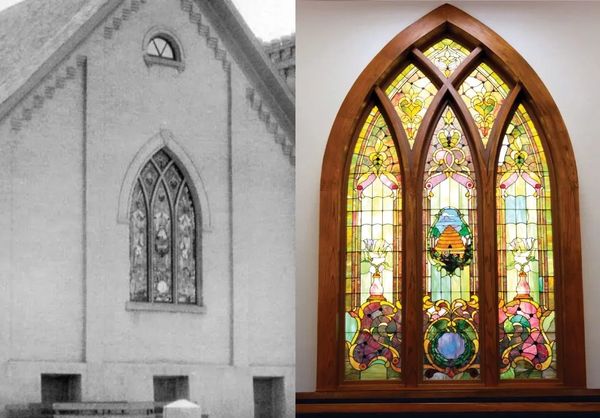
One of the most treasured features of Lehi’s historic Fourth Ward meetinghouse is its magnificent stained glass window. Donated in 1918 by Robert Gilchrist—a Scottish immigrant who journeyed across the plains with a freight company and later became a respected member of the Lehi 4th Ward—this large Gothic-style window was placed on the west wall of the new chapel. At a time when stained glass was uncommon in most Utah meetinghouses, this generous gift enhanced the beauty and reverence of the growing congregation.
The centerpiece of the window features a beehive, which is one of Utah’s most enduring symbols. For early Latter-day Saints, the beehive symbolized industry, cooperation, and the significance of working together for the community's benefit. Surrounding the beehive are vibrant flowers, trees, clouds, and blue skies, creating a scene that honors both faith and the beauty of God’s creations.
When the original Fourth Ward building was eventually demolished, many feared that this beloved stained glass window would be lost. Fortunately, it was carefully preserved and later installed in the newer Fourth Ward meetinghouse on 900 North, where it continues to inspire visitors more than a century after its dedication. Today, it stands as not only a beautiful work of art but also as a rare surviving connection to the faith, sacrifice, and craftsmanship of Lehi’s early pioneers, cementing its place in chapel history.